Wednesday, October 19, 2011
I
found very weird that the percent of saved children third class was so small,
and that the percentage of saved men third class was twice bigger than men
second class.
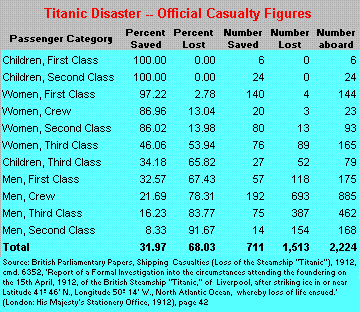
you can find several explanations on
CLASS DISTINCTIONS
First
Class women and children were about 6% of those aboard the Titanic, but
constituted 20% of the survivors. In contrast, steerage passengers were a third
of all aboard, but only one fourth of those
saved.
LIFEBOATS
Half the lifeboats, and all of the first six launched, contained only
passengers from First Class, plus crew members to do the work.
The total capacity of the combined total of lifeboats was rated at
1,178. still, the number of
saved was 711, number of lost 1513 !!!
14 year old Lucile Carter in First Class was considered a child, but a 14
year old Annie McGowan in Steerage was considered to be an adult.
All of these early launched "First Class" lifeboats were notorious for being launched at less than half capacity. Two of the earliest launched lifeboats, 7 and 1, had more men than women aboard.
All of these early launched "First Class" lifeboats were notorious for being launched at less than half capacity. Two of the earliest launched lifeboats, 7 and 1, had more men than women aboard.
It did make a difference whether a
passenger was on the port or starboard side of the ship, since the crew loading
passengers on the port side did refuse to allow men to board.
Dr. Washington Dodge reported that until the sixth or seventh lifeboat was
launched (by which time no Second or Third Class passengers had
been put aboard), there was no general awareness that the Titanic would sink.
However, evidence is clear that the chief officers of the Titanic knew before
the first lifeboat was launced that the Titanic would sink, but did not take
measures to ensure that all boats were adequately filled.
Although lifeboat 4 picked up six or eight passengers from the water and D
hauled in at least one man before they distanced themselves from the ship, the
only lifeboat to go back to try to rescue people after the Titanic went under
was 14, not a "First Class" lifeboat. It was only able to pick up three or four
passengers from the water.
ADULT MALE PASSENGERS
Men in Second Class had no physical barriers to pass, so honor and
resignation may have reigned high. However, more compelling than a sense of good
manners and gentlemanliness was probably the stigma of shame and cowardice that
would be attached to many adult males who had the audacity to survive the
sinking. As a result, adult male survivors had compelling reasons for their
defensiveness and inventions of excuses for boarding a lifeboat.
A high percentage of the men in steerage who got to lifeboats reached them
only by leaping onto them after they were launched or by scrambling aboard the
two emergency lifeboats as they floated off moments before the Titanic finally
went down
Mine
conclusions:
- there could be saved at least double
- the rule children & women first wasn't applyed for third class
- a lot of lifeboats were underloaded, that explains the big number of saved men from the third class, who having no chance to get a place in a lifeboat, they jumped into the water, and then got a place into a lifeboat
- only one lifeboat took people from the sea
- Egoism and differences of class explain the low number of survivors


Subscribe to Posts [Atom]
